Yard Drain Cleaning in Yorba Linda: Clear the Line Before El Niño
NOAA's Climate Prediction Center puts the odds of a very strong El Niño this fall and winter at better than 90 percent, and the seasonal outlooks lean wetter than normal for Southern California. Nobody can promise how much rain any one storm will bring. But if this winter delivers even part of what the models suggest, the yard drains around your Yorba Linda home could get a real workout this winter.
Most homeowners never think about those drains. The grates collect runoff from the lawn, the planters and the downspouts, and a buried line carries it out to a small outlet in the curb. When that line is open, you never notice it. When it is closed, water has one place to go: back up the grates, into the side yard, and toward your foundation.
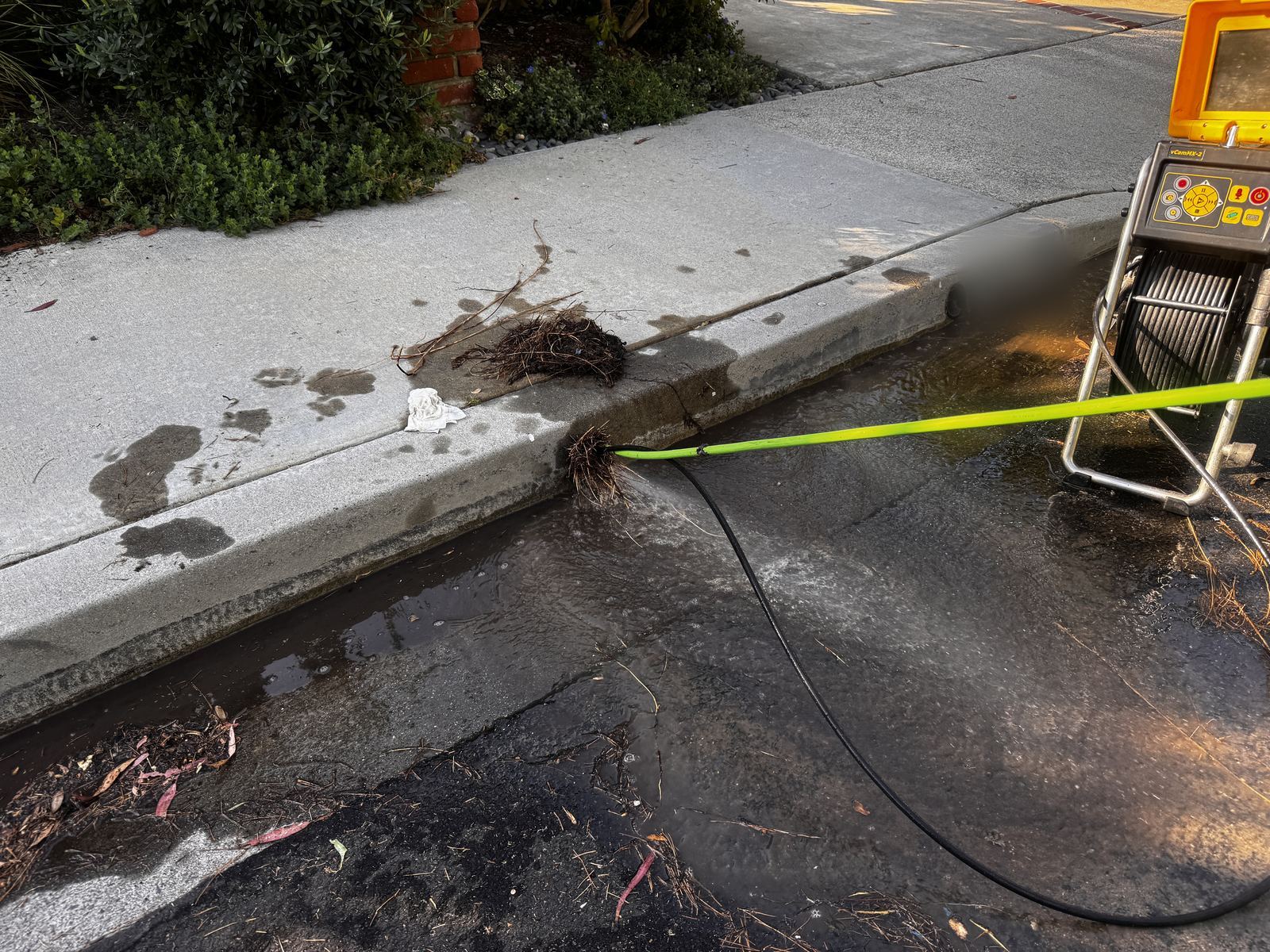
What a completely blocked yard drain looks like
On a recent job the homeowner called because the upstream drains in the yard had simply stopped working. Water pooled at every grate and sat there. Our camera found the reason: a root mass had closed the line completely, about 36 feet in from the curb outlet. Everything behind that point was a dead end.
Roots do not have to break a pipe to get in. Yard drain lines run shallow, right through the root zone of lawns, shrubs and trees, and a tiny gap at a fitting is enough. Once inside, a few hair-thin roots feed on the water and silt that pass by, and over a few seasons they fill the pipe.
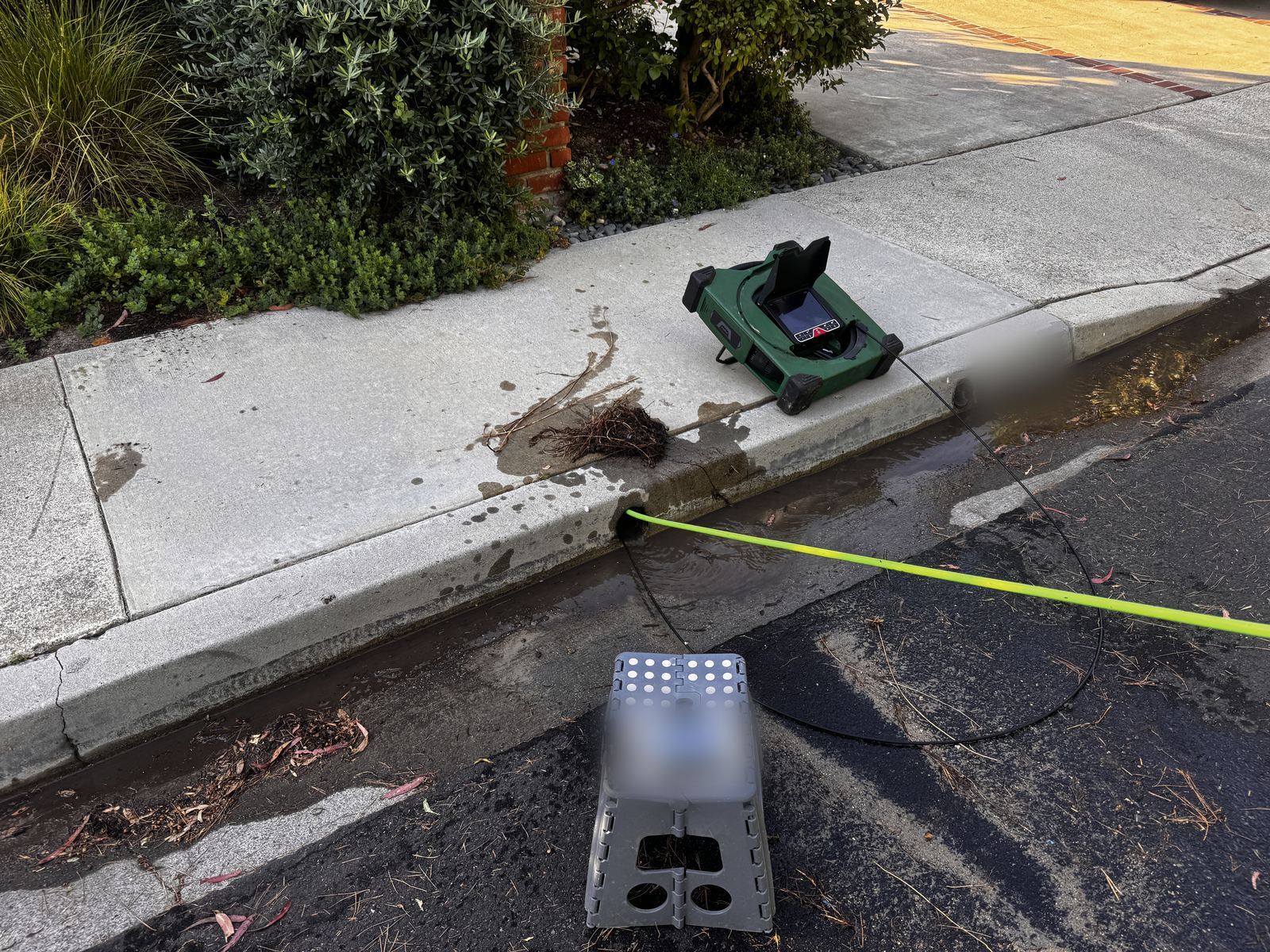
Why Yorba Linda yards are set up for this
Yorba Linda is full of mature landscaping and sloped lots. Mature trees and hedges mean big root systems right next to the drain lines. Slopes mean a lot of water arriving at the same low spots all at once. And on larger lots, the run from the back yard to the curb can be long, which gives roots and silt more places to settle. A line that seems fine after a light shower can quit halfway through the first real storm.
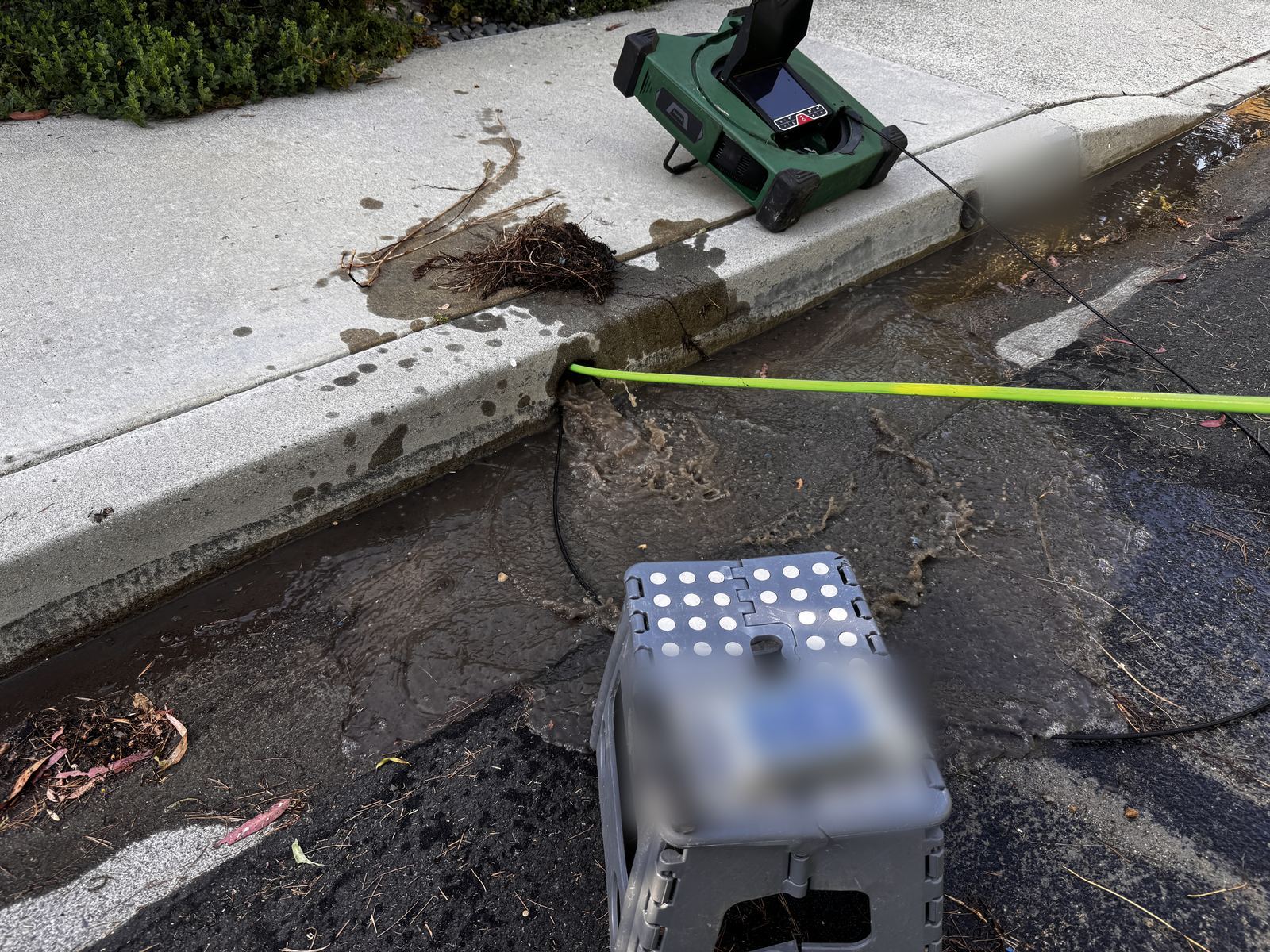
Why we jet instead of snake
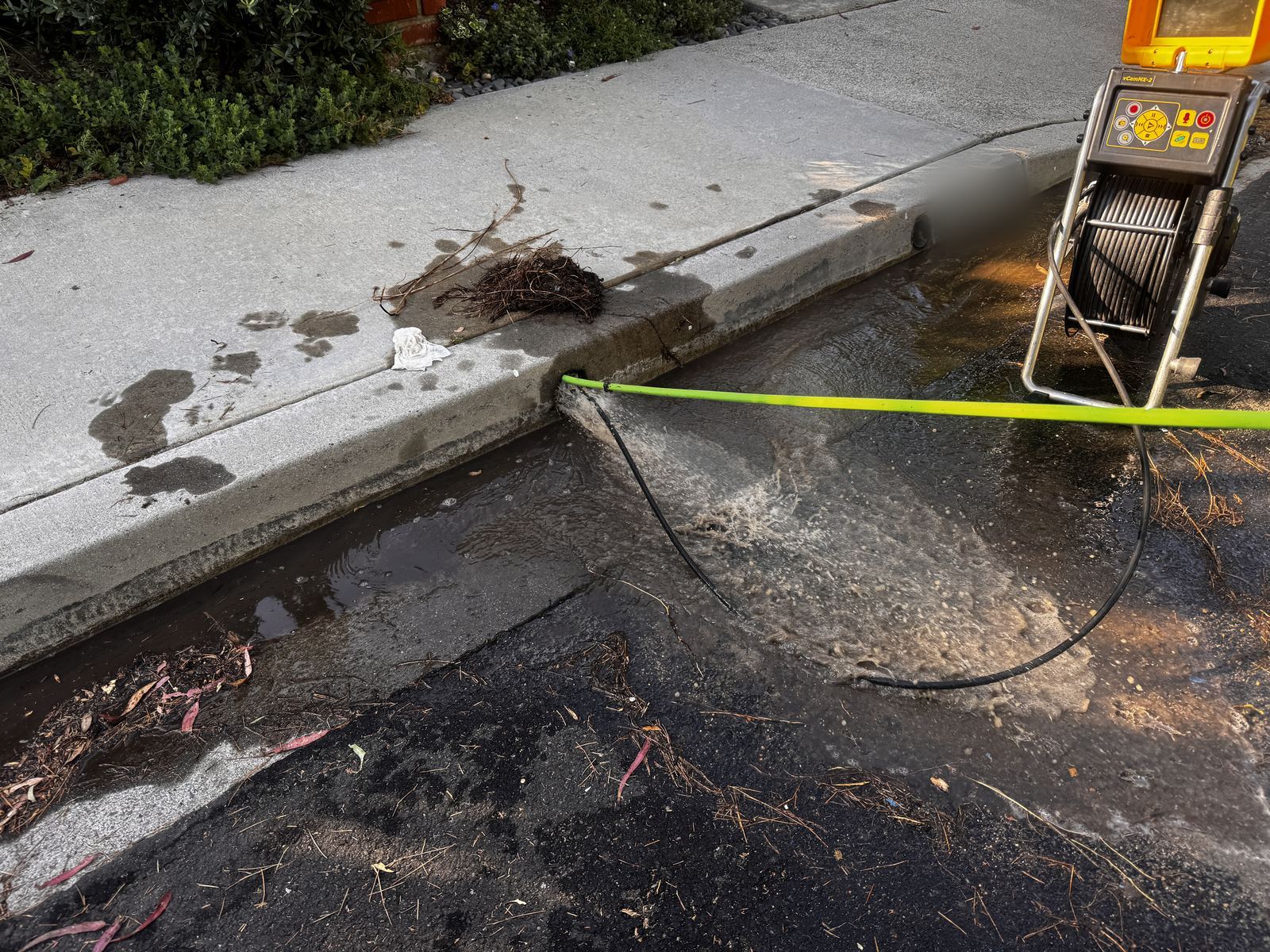
A drain snake punches a hole through a clog. Water trickles through again, but the roots stay rooted to the pipe wall, the silt stays on the bottom, and the problem is back by next season. A hydro jetter uses rear-facing, high-pressure nozzles that scour the full diameter of the pipe and push everything they loosen downstream and out the curb. You can see it happen in the photos: first the roots, then the trapped water.
After jetting we run the camera through the line again to confirm it is open from end to end. If there is a spot that keeps catching debris, you will know how far in it is, measured in cable footage from the outlet.
A five-minute test you can do this weekend
- Run a garden hose into your highest yard drain for two or three minutes.
- Walk out to the curb. Water should show up at the outlet and flow steadily.
- If the grate fills and overflows, or water appears at a different grate instead, the line is at least partly blocked.
- A dry curb outlet with the hose still running is the clearest warning sign there is.
- Also look for grass or weeds growing out of the curb outlet, and silt rings around the grates.
If any of those show up, call 714-992-6363 before the rain does the testing for you.
What you get when we are done
You get a line that is open all the way to the curb, a camera check confirming it, and a straight answer about anything we saw along the way, with the distance from the outlet. No upsell and no guesswork. FlowPro is new, but the inspector behind it is not: Rob Kruger has been inspecting Southern California homes since 2020.
Get ahead of the rain
Drain schedules fill up fast once the first big storm hits. Book your yard drain cleaning in Yorba Linda or anywhere in North Orange County now, while the ground is dry.
Call 714-992-6363