The Drain Next to Your Outdoor Kitchen Was Built for Rain, Not Grease
Outdoor kitchens have become standard on hillside lots in Anaheim Hills: a built-in grill, a stainless cabinet run, maybe a sink, and a tile or paver patio that slopes gently toward a square grate. That grate is a patio drain. It ties into the same buried line as the rest of your yard drains, and it was designed for one job: getting rainwater off the patio and out to the street.
It was not designed for what an outdoor kitchen sends into it.
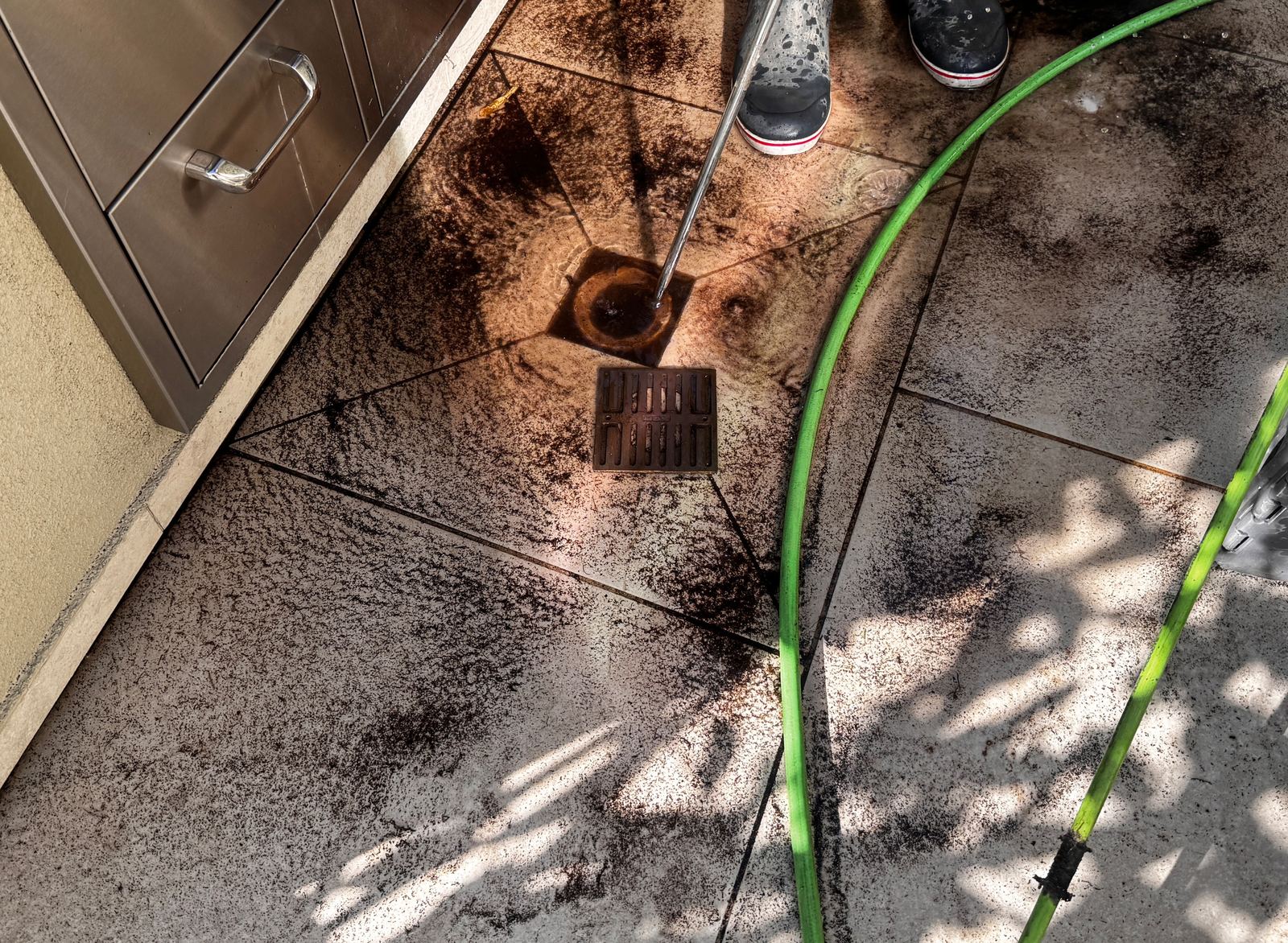
What actually goes down a patio drain
Watch a cookout from the drain’s point of view. Grease drips off the grill and gets hosed toward the grate. Grill brushes get rinsed over it. Food scraps, ash and marinade wash in after them. Add the normal load of leaves, potting soil and sprinkler silt, and the patio drain is doing a job nobody planned for.
Grease is the problem. It goes down warm and liquid, cools in the line, and sticks to the pipe wall. Once there is a tacky coating, silt and leaf litter stick to it. Over a few seasons the opening gets smaller, and roots that find their way in at a fitting have something to hold on to. The patio drain still takes a light rinse just fine, which is why nobody notices until a real storm sends more water at it than the narrowed line can carry.
Where that water goes
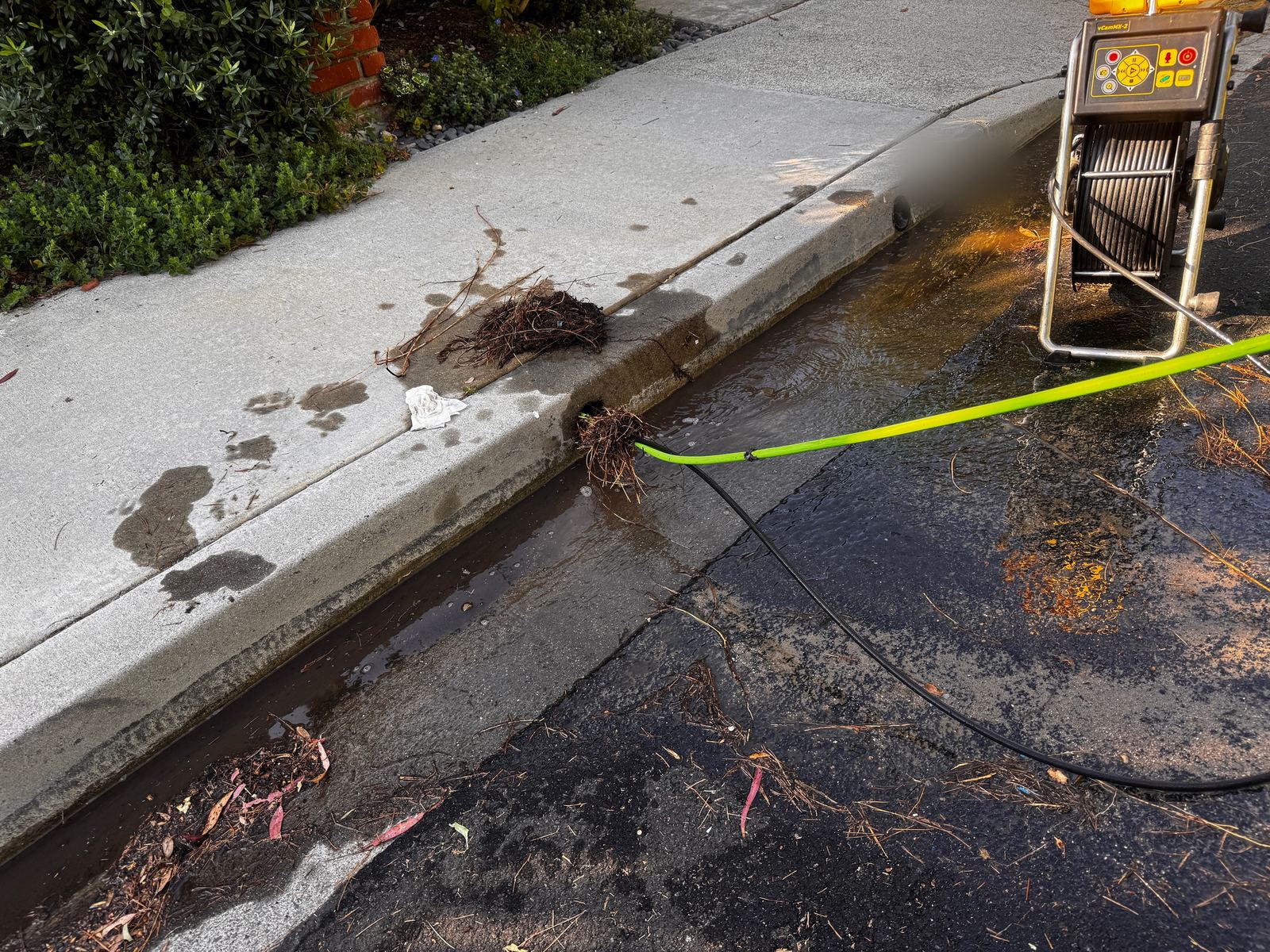
Most yard and patio drains in North Orange County run to a small opening in the curb. From the gutter, that water enters the city storm drain system, and storm drains are not sewers. As the City of Fullerton puts it plainly, urban runoff flows untreated through the storm drain system to channels, creeks and the ocean. Orange County's stormwater program says the same: storm drain water is not treated or cleaned before it leaves the system.
So grease and food rinsed into a patio drain do two things. They slowly close your line, and whatever gets through ends up in the gutter and then the creek. Fullerton’s list of things to keep out of storm drains even includes water from hosing down patios.
If your outdoor kitchen has a sink
Ask how it was plumbed. A sink is a plumbing fixture, and fixture water is generally meant to go to the sanitary sewer, not the storm system. Some outdoor sinks were tied straight into the nearest patio drain because it was easy. If you aren’t sure how yours was done, your city’s building department can tell you what it requires, and a camera can show where the sink line actually goes.
Keeping the patio drain open
- Scrape and wipe the grill and grease tray into the trash instead of hosing them toward the grate.
- Sweep the patio before you rinse it, so leaves and soil go in the green bin, not the line.
- Lift the grate a couple of times a year and clear what is sitting in the basket or the top of the pipe.
- Run a garden hose into the patio drain for a few minutes and walk out to the curb. Water should show up at the outlet and keep flowing.
If the patio drain backs up during a rinse, water shows up at a different grate instead, or the curb outlet stays dry, the line needs attention. Call 949-516-6667.
Why this matters more this winter
According to NOAA's Climate Prediction Center, the odds of a very strong El Niño this fall and winter are better than 90 percent, and the event is expected to peak between November and January. No forecast can promise how much rain any one storm brings. But a hillside patio collects a lot of water at one low spot, and a patio drain that has been narrowing for years tends to quit right when it is needed most, sending water toward the house instead of the street.
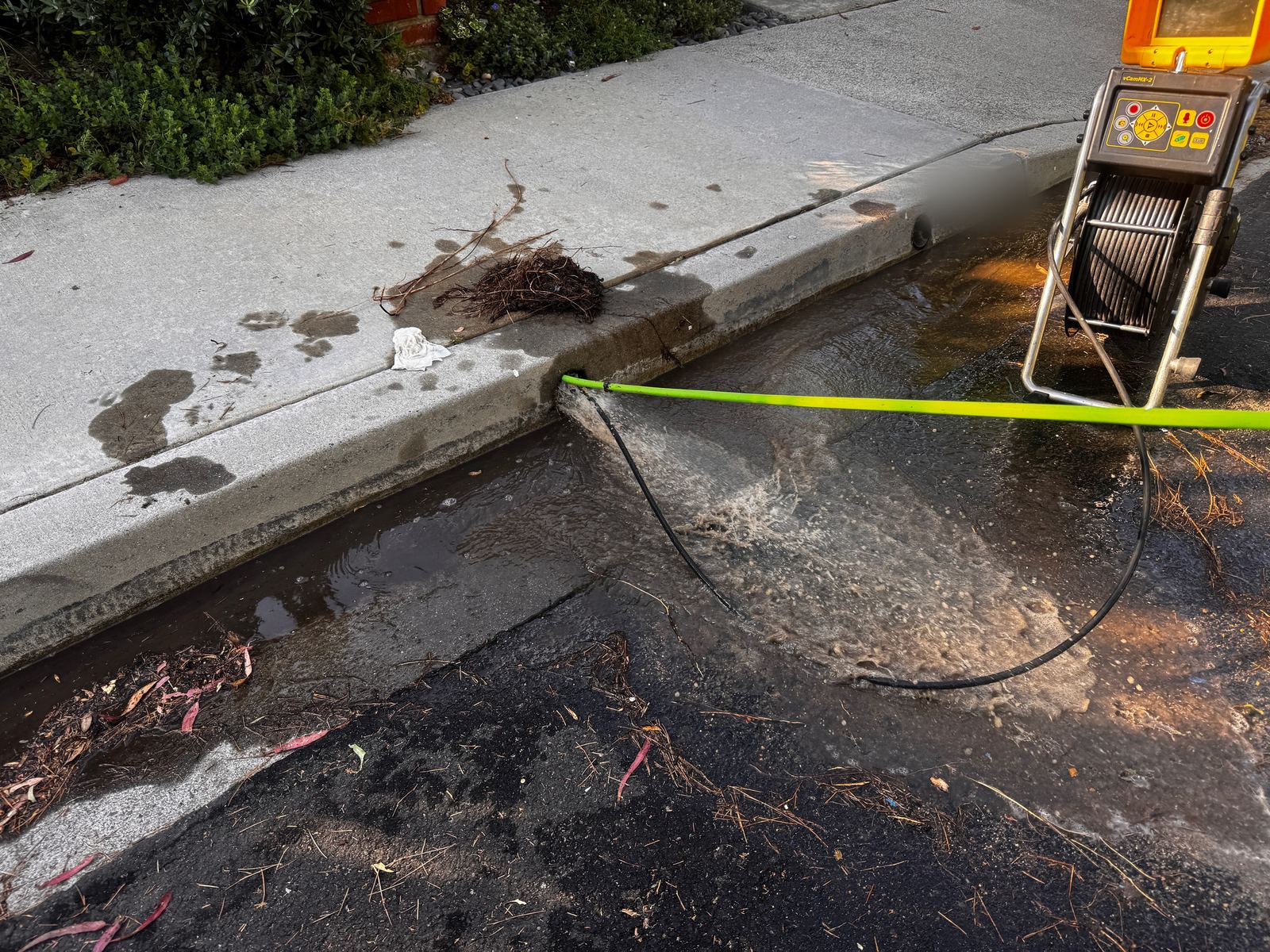
When a line needs clearing, a high-pressure jetter scours the full pipe wall and pushes grease, silt and roots out the curb, where a snake would only poke a hole through the middle. FlowPro is run by Rob Kruger, and he will give you a straight answer about what your drains need.
Get the patio drain ready before the storms
Schedules fill up once the first big storm arrives. Have your outdoor kitchen and patio drains checked now, anywhere in North Orange County.
Call 949-516-6667