Yorba Linda has a housing profile that's unusual for Orange County, and it changes what we find underground. Lots here are large — often a quarter acre or more, with plenty running well beyond that in the equestrian neighborhoods. That means the sewer lateral running from the house out to the city main is frequently far longer than what you'd find on a compact Anaheim or Fullerton lot.
A longer line gives debris more distance to settle, more joints to shift, and more root systems to cross on the way out. That's why on a lot of Yorba Linda properties we jet the line first and run the camera second — a scope pushed into a line packed with root hair and sediment shows you the blockage, not the pipe.
Every visit includes an on-site walkthrough of what we find, plus a detailed PDF report emailed the same day — documentation you can use for repairs, negotiations, or your own records.
Yorba Linda's Housing Stock and Why It Matters
Yorba Linda incorporated in 1967, and the decades that followed turned former citrus and ranch land into subdivisions. The bulk of the city's homes went up between the early 1970s and the 1990s, with newer development on the eastern side continuing into the 2000s. Scattered through the older core near Yorba Linda Boulevard, you'll also find pre-incorporation properties dating back considerably further.
That spread matters, because sewer material changed over those years. Homes from the pre-1970 era commonly ran vitrified clay, which fails at the joints. Properties built from the 1970s onward more often used cast iron or early ABS — cast iron scales and corrodes from the inside, and early plastic lines can flatten or separate where the ground has moved. None of it is beyond its useful life automatically, but a 1975 line is now past fifty years old, and that's well within the window where problems start showing up.
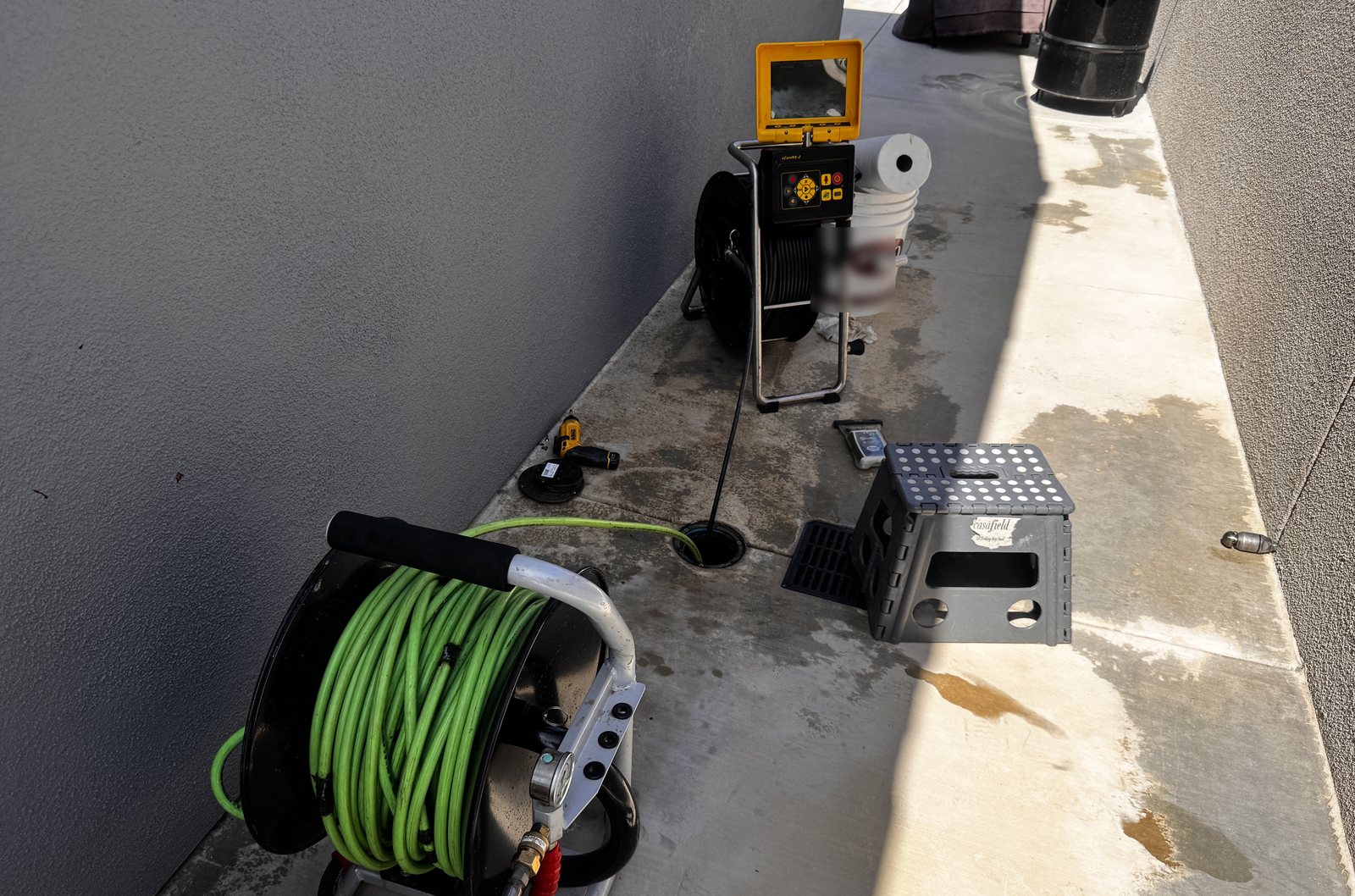
Yorba Linda homeowners take note: A standard home inspection stops at the fixtures inside the house. The underground lateral running from your home to the main is your responsibility, and on the deep lots common here that can be well over 100 feet of pipe nobody has looked at.
The Tree Canopy Is the Real Story
Yorba Linda's identity is built around mature landscaping — the greenbelts, the horse trails, the deep front yards with decades-old shade trees. It's genuinely one of the nicer places in the county to walk around. It's also the single biggest sewer risk factor in the city.
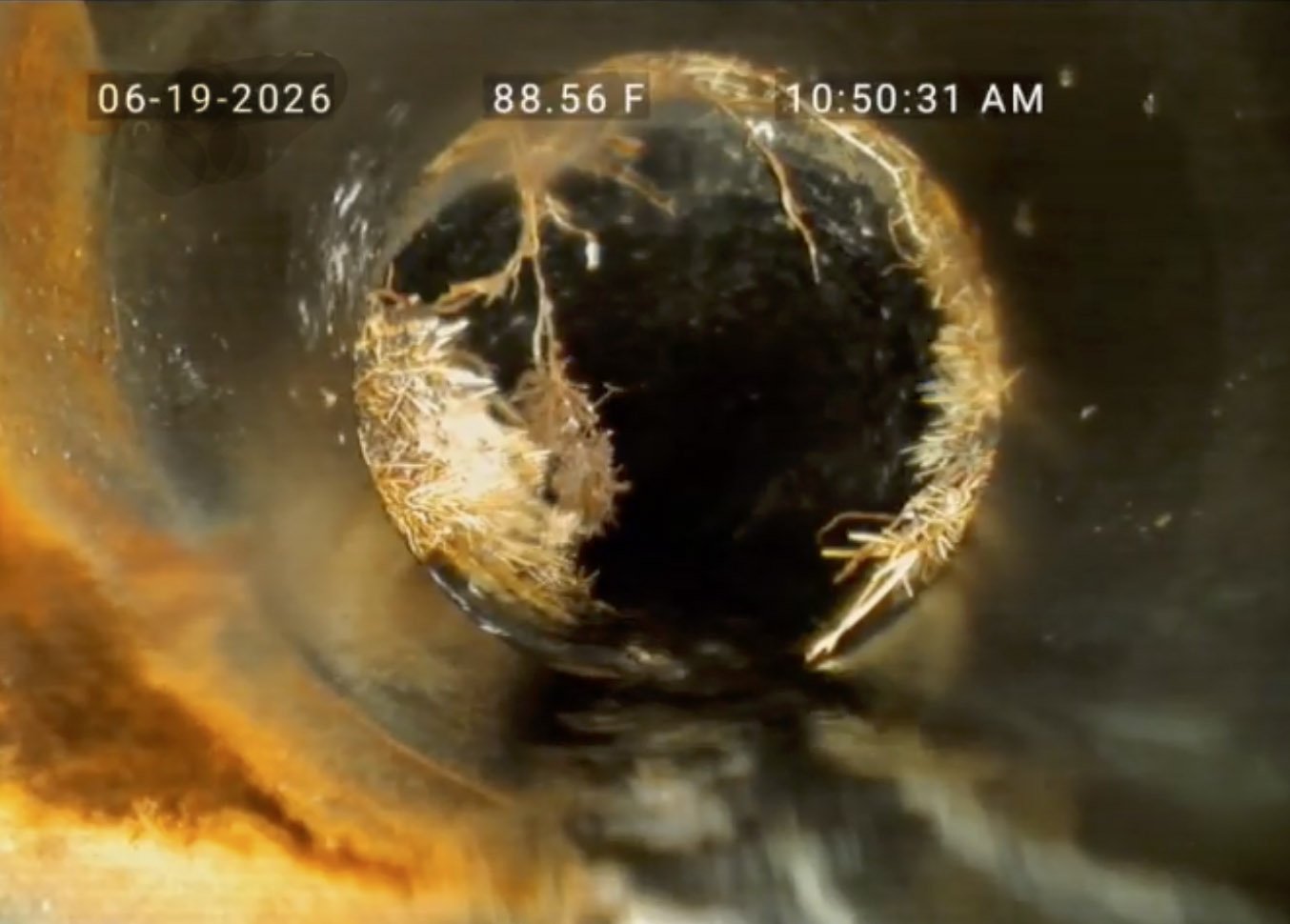
Roots follow moisture. A hairline crack or a slightly separated clay joint releases enough vapor into the surrounding soil that roots will find it, work in through the gap, and then keep growing inside the pipe where there's water and nutrients year-round. By the time it causes a noticeable backup, the root mass is usually well established.
How Hydro Jetting and the Scope Work Together
Hydro jetting uses high-pressure water — typically 3,000 to 4,000 PSI — delivered through a specialized nozzle that scours the full circumference of the pipe wall. Unlike a mechanical snake, which punches a hole through a clog and leaves the rest, jetting clears grease, root hair, scale, and sediment from the entire line, restoring it closer to its original diameter.
We watch pressure throughout the job and match it to the pipe material and condition. Jetting a severely compromised line at full pressure can do more harm than good, so if the camera or the feel of the line tells us to back off, we back off and tell you why.
Once the line is clear, we run the camera the full length and you watch the live feed with us. We narrate it as it goes — pipe material, joint condition, remaining root growth, offsets, wall damage, and where each of those sits by footage marker.
Common Issues We Find in Yorba Linda
- Root intrusion — mature trees on large lots and along greenbelts finding their way into joints, often at multiple points along a single long run
- Scale and grease buildup — accumulated on cast iron lines, narrowing flow and catching solids
- Pipe offsets — joints shifted by expansive clay soil that swells and contracts with the seasons
- Bellied sections — low spots holding standing water, a common cause of repeat backups on long laterals
- Hard water mineral deposits — a persistent issue across this part of the county
- Deteriorating clay pipe — segments on older properties nearing the end of their structural life
📄 Every Inspection Includes a Detailed PDF Report
After every job, FlowPro OC emails you a written PDF report with our findings, pipe condition assessment, notable observations by footage marker, and recommended next steps — documentation you can hand to a contractor, use in negotiations, or keep for your records.
Yorba Linda transactions tend to run at higher price points than much of North Orange County, which cuts both ways during escrow. There's more at stake if a line fails after closing — and more room to negotiate a credit if you have documentation in hand before you sign. A report beats a verbal "the plumber said it looked fine."
When to Schedule Hydro Jetting or a Sewer Scope in Yorba Linda
- You're in escrow on a home built before 1990 — which covers most of the city
- Drains are slow throughout the house, or backups return within months of a basic snaking
- You hear gurgling from drains or toilets when water runs elsewhere in the house
- There's a green or soggy patch of lawn along the path of the lateral
- Large mature trees sit near the run between your house and the street
- The line hasn't been serviced or inspected in five or more years
Serving Yorba Linda and the Surrounding Area
FlowPro OC works throughout Yorba Linda — from the older neighborhoods near Main Street and the Nixon Library out to the newer developments east of Fairmont. We're also active in Placentia, Anaheim, Fullerton, Orange, and the rest of Orange County.
Call us at 714-992-6363 to schedule your inspection or ask questions before booking. Straight answers, not a sales pitch.
Schedule Hydro Jetting or a Sewer Scope in Yorba Linda
On-site walkthrough, same-day PDF report, and honest answers. That's the FlowPro OC difference.
714-992-6363 Call to Schedule