Orange is unusual among Orange County cities in how much of its early housing survived. Old Towne is one of the largest National Register historic districts in California, and the homes inside it were not torn down and replaced the way they were in a lot of neighboring cities. The upside is a genuinely intact early-20th-century neighborhood. The underground consequence is a lot of original sewer lateral still in service.
That shapes what we find here — and what a homeowner or buyer should do about it.
Three Eras of Pipe Under One City
Old Towne and the original townsite (1900s–1930s). Craftsman bungalows and early revival homes around the Plaza, much of it still on vitrified clay. Clay is durable in compression and holds up structurally for a long time, but it was laid in short sections with mortar joints — and every joint is a seam. A century of ground movement means many of those seams have opened slightly.
Post-war expansion (1940s–1960s). As the citrus groves were subdivided, cast iron became common for laterals. Cast iron fails from the inside out: the pipe wall corrodes, scale builds up, and the usable diameter shrinks. A cast iron line can look fine from the outside while running at a fraction of its original capacity.
Later development (1970s onward). Newer areas off Chapman and toward Santiago Canyon are generally on ABS or PVC, which doesn't corrode or open at the joints. Problems here are mechanical — a belly from settling, or root pressure at a fitting.
The Tree Canopy Is Part of the Problem
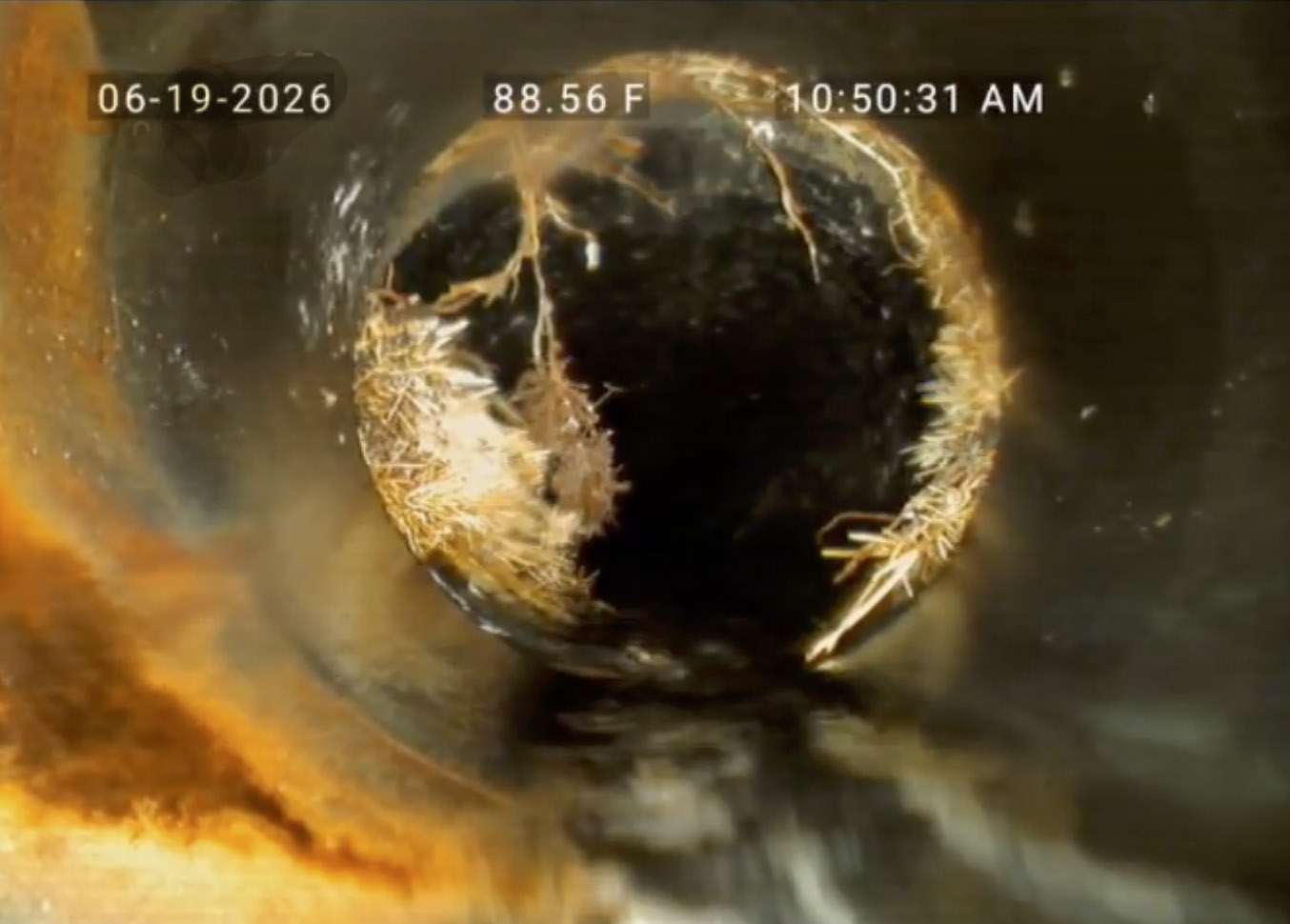
Old Towne's street trees are one of the reasons the district looks the way it does, and they are also a recurring source of sewer trouble. Roots don't break into sound pipe — they find existing openings and follow moisture. Those open mortar joints in clay lateral are exactly the opening a root system is looking for, and mature trees have had decades to find them.
Once a root enters a joint it thickens over time, and the mass catches everything moving past it. What starts as a few root hairs becomes the anchor point for a full blockage. This is why root problems in older Orange neighborhoods tend to recur on a schedule: cabling cuts the root back, but the entry point is still there.
If you're buying in Orange: A standard home inspection stops at the fixtures inside the house. The lateral running out to the city main isn't covered — on a pre-1970 Orange home, that's the single largest unknown in the transaction.
What an Inspection in Orange Looks Like
On lines with heavy scale or root growth, we jet before running the camera — otherwise the lens is looking at debris rather than pipe wall. On a clean line we go straight to the scope.
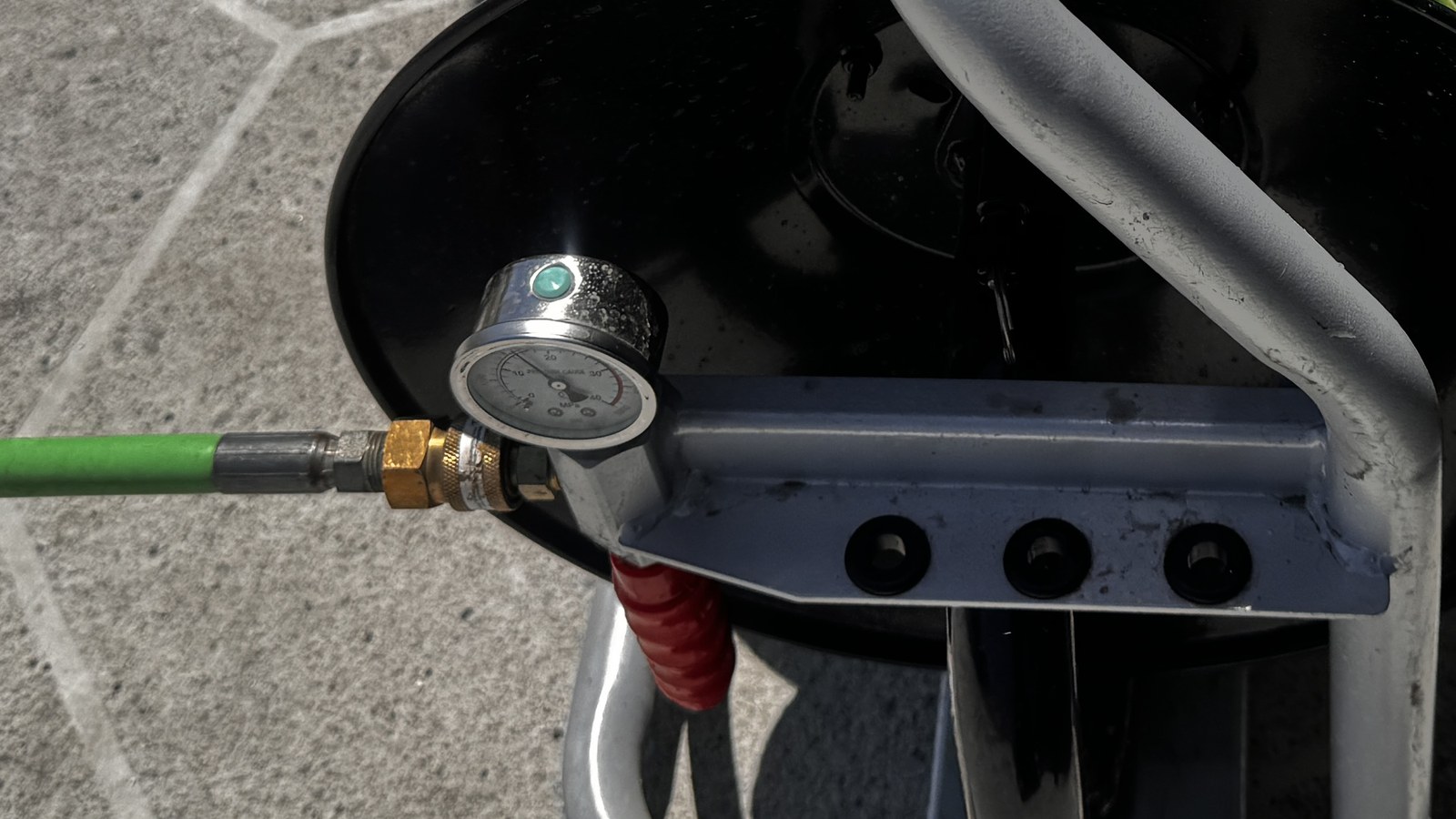
Jetting pressure isn't a single setting we run on everything. We watch the gauge at the reel and dial the working pressure to the pipe we're in — a cast iron line thick with scale takes a different approach than a century-old clay lateral with open mortar joints, and pushing a fragile line harder than it can take is how a cleaning turns into a repair.
For how hydro jetting works, how it differs from snaking, and when a line shouldn't be jetted at all, see our hydro jetting service guide.
You watch the live feed with us and we narrate what's on screen — pipe material, joint condition, root growth, offsets, bellied sections. Common findings on Orange laterals:
- Root intrusion at clay joints — often at multiple points along a single run
- Scale buildup in cast iron — narrowing the line well before anything backs up
- Offset joints — sections shifted by ground movement, creating a ledge that catches solids
- Bellied sections — low spots holding standing water between uses
- Orangeburg — occasionally found in mid-century runs, and effectively at end of life wherever it turns up
📄 Every Inspection Includes a Detailed PDF Report
After every job, FlowPro OC emails a written PDF report with our findings, a pipe condition assessment, observations noted by footage marker, and recommended next steps — documentation you can hand to a contractor, use in a negotiation, or keep for your records.
In a purchase, that report is leverage before you close — grounds to request a repair, ask for a credit, or walk. If you already own the home, it tells you what condition the line is in and roughly what timeline you're working against.
When to Book
- You're buying a home built before 1970, especially in or near Old Towne
- Backups keep returning after a basic snaking
- Drains gurgle when water runs elsewhere in the house
- There's a green or wet patch of lawn along where the lateral runs
- Mature trees line the parkway or front yard
- The line hasn't been inspected in five years or more
We work throughout Orange — the historic core around the Plaza, the Chapman University area, El Modena, and the newer developments toward Santiago Canyon. Call 714-992-6363 with questions before booking.
Schedule an Inspection in Orange
On-site walkthrough, same-day PDF report, and honest answers. That's the FlowPro OC difference.
714-992-6363 Call to Schedule