Pull up to almost any home built in Placentia before 1985 and you'll notice the same thing: big, established trees lining the front yard, their canopies casting shade over the driveway and their surface roots already buckling the sidewalk in spots. They're beautiful. They're also one of the most common reasons homeowners in Orange County end up with a sewer line problem they never saw coming.
At FlowProOC, we run sewer scope cameras through pipes across Orange County every week. And the number one finding we document — by a wide margin — is tree root intrusion. The good news is that a sewer scope inspection lets you see exactly what's happening before a small root problem turns into a full-blown sewage backup or a collapsed pipe that requires thousands of dollars in repair work.
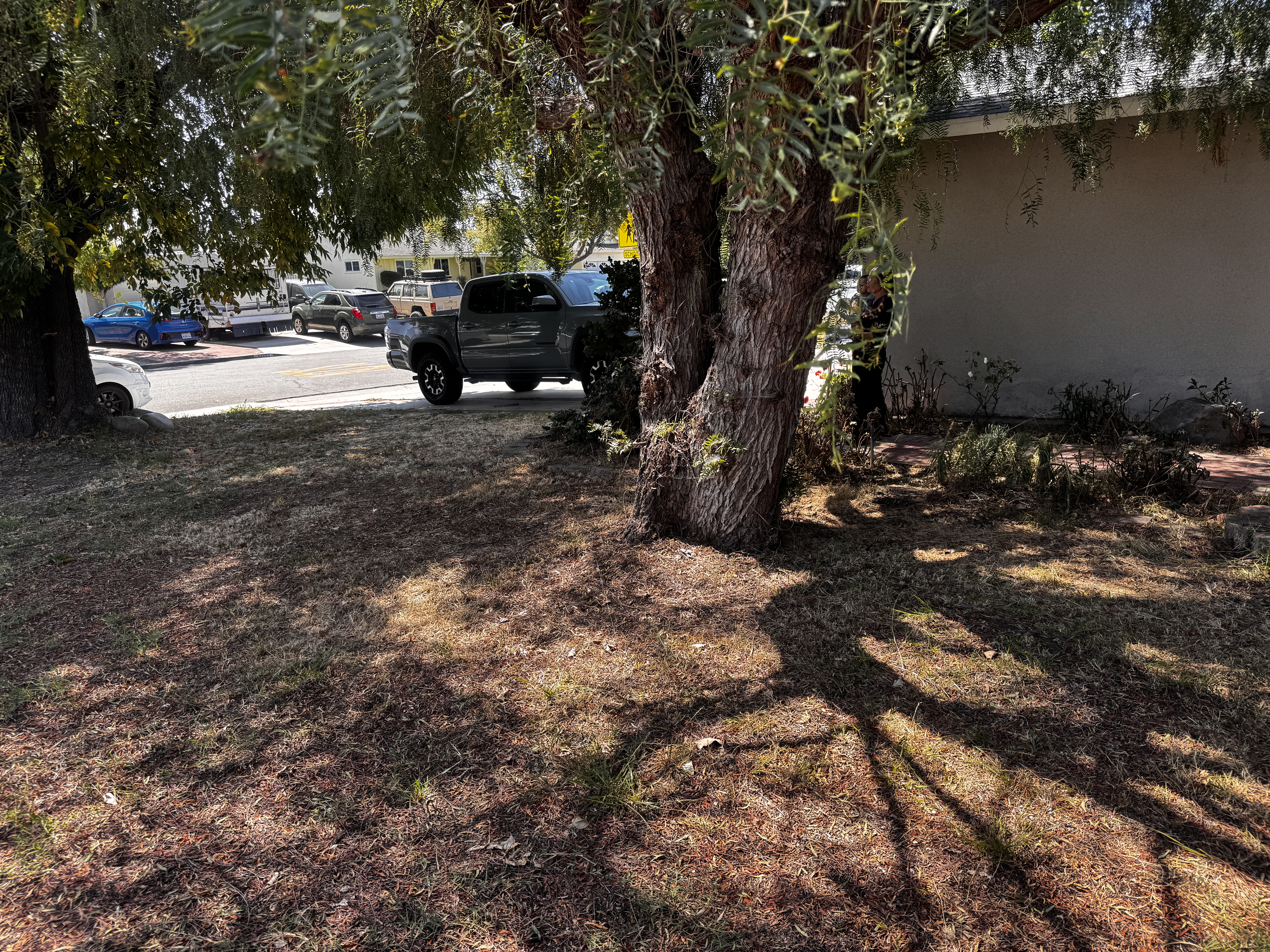
A mature tree like this one, situated close to the home's sewer line, is one of the top risk factors for root intrusion in older Orange County neighborhoods.
Why Placentia Homes Are Especially Vulnerable
Placentia was largely built out during the 1960s and 1970s, which means a significant portion of the city's residential sewer laterals — the pipes running from your home to the city main — were originally installed in clay or cast iron. Both materials were standard for the era and perfectly serviceable when new. But after 50 or 60 years of ground movement, shifting soil, and Orange County's occasional heavy rain events, those joints loosen. Even a hairline crack is enough for a tree root to find its way in.
The trees themselves have had decades to mature right alongside the plumbing. Pepper trees, ficus, liquid amber, and older eucalyptus are all common in Placentia's residential neighborhoods and all known for aggressive root systems that seek out any available moisture — including the warm, nutrient-rich water flowing through your sewer line.
What Root Intrusion Actually Looks Like on Camera
When we run a camera through a compromised sewer line, root intrusion typically shows up in stages. Early-stage intrusion looks like fine, white tendrils hanging from a joint inside the pipe — they're easy to dismiss, but if left alone, those delicate strands catch toilet paper, grease, and solids passing through the line. Over time, they form a dense root mass that can partially or completely block flow.
In more advanced cases — which we see fairly often in Placentia homes that haven't had an inspection in years — the camera reveals what technicians call a root ball: a thick, tangled obstruction that looks like a dark curtain across the pipe interior. At that stage, the pipe itself is usually cracked or fractured, meaning root removal alone isn't enough. The structural damage has to be addressed too.
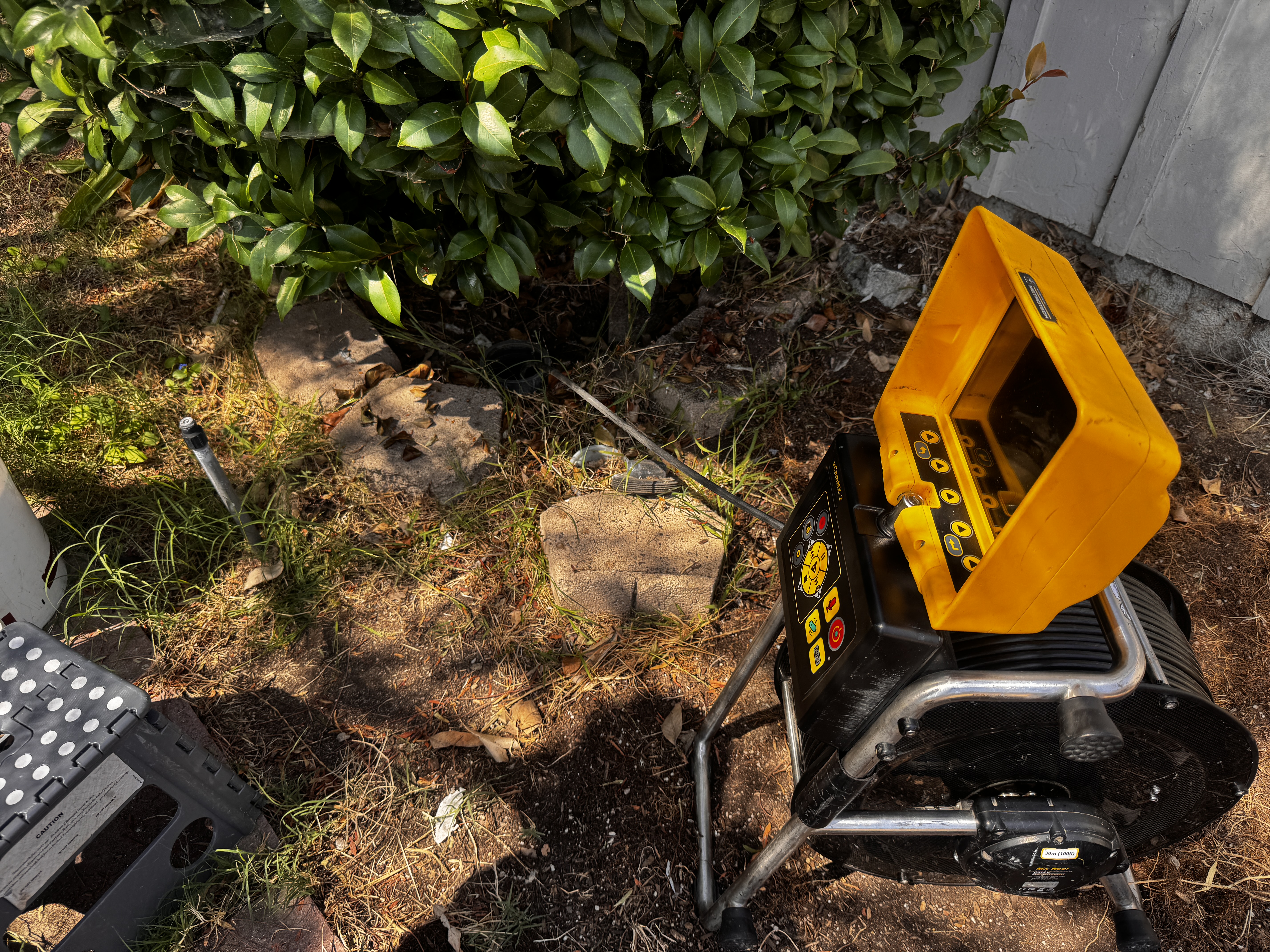
FlowProOC at a recent Placentia job — camera reel set up at the cleanout access point, ready to run the full length of the lateral.
The Warning Signs You Might Already Be Seeing
Common indicators of root intrusion or sewer line trouble:
- Drains that run slowly throughout the house — not just one fixture
- Gurgling sounds from toilets or floor drains when other fixtures are in use
- A sewer odor near floor drains, in the yard, or around the cleanout
- Patches of lawn that are unusually green or lush for no obvious reason
- A recurring backup that snaking temporarily clears but keeps returning
- Large trees within 20–30 feet of the home's sewer cleanout
It's worth noting that many Placentia homeowners with significant root intrusion have none of these symptoms yet. That's the nature of the problem — the pipe can be significantly compromised well before drainage issues become noticeable inside the house. By the time you're snaking the line every few months or dealing with a backup, the underlying damage is usually already substantial.
What FlowProOC Does Differently
A sewer scope inspection isn't just about running a camera through a pipe. What matters is what happens after the camera comes out. At FlowProOC, every inspection includes a clear, plain-language explanation of findings on-site — we'll walk you through exactly what we saw, where in the line we found it, and what it means for your home. You'll also receive a detailed PDF report emailed to you the same day, complete with footage references and documented findings you can share with a contractor, a real estate agent, or your own records.
That combination — an honest on-site conversation plus a written report you actually keep — is what makes a sewer inspection genuinely useful, not just a box-checking exercise during a home purchase.
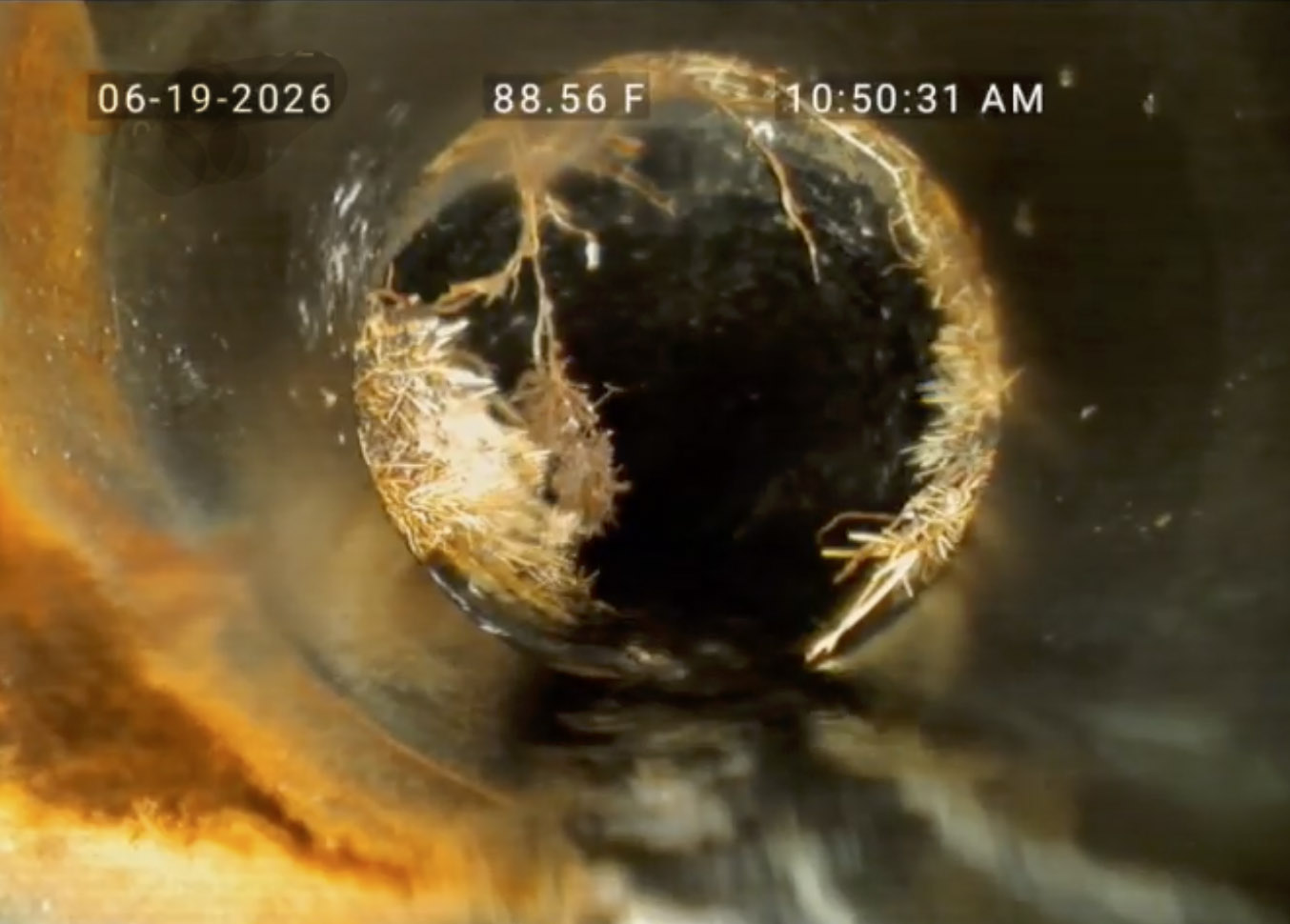
This is what root intrusion looks like on camera. These roots have grown through a joint in an older clay pipe, and without intervention they'll continue to expand and trap debris.
How Often Should Placentia Homeowners Inspect?
If your home was built before 1985 and you have mature trees in the front or side yard, an inspection every two to three years is a reasonable baseline. If you've already had a root issue addressed — whether through hydro jetting or mechanical root cutting — follow-up inspections every 12 to 18 months are a smart way to confirm the treatment held and catch any regrowth early.
For homebuyers, a sewer scope should be treated as a non-negotiable part of due diligence on any Placentia property with significant tree coverage. The cost of an inspection is a fraction of what sewer lateral repair or replacement runs — and in a competitive market, documented inspection results give you real negotiating leverage if an issue turns up.
FlowProOC serves Placentia and all of Orange County. We provide clear on-site findings and a detailed PDF report after every inspection — no guesswork, no vague answers. Call or text us at 714-992-6363 to schedule.