Cypress went up fast. The bulk of the city was built between the late 1950s and the early 1980s — single-story ranch and split-level tracts, slab-on-grade, attached garages, streets that all went in within a few years of each other. It is a well-built inventory and it holds value.
The sewer laterals under those homes are original clay or cast iron in a large share of cases. That part is expected. What surprises people in escrow is something else entirely: a lot of these houses have no exterior sewer cleanout at all.
Why So Many Cypress Homes Have No Cleanout
Two reasons, and they stack. Exterior cleanouts were not consistently installed on tract housing of that era the way they are today, so a fair number of these lines were simply never given one. And slab-on-grade construction removes the fallback — there is no basement, no crawlspace, no interior access point to work from.
The second reason is that the cleanout is often there and nobody can find it. Sixty years of landscaping, added patios, and re-poured driveways bury them. We have found cleanouts under four inches of soil, under a raised planter, and under a slab that got poured straight over the top. If a previous owner told you there wasn't one, that is worth verifying rather than believing.
The Side-Yard Cleanout, When There Is One
This is the access point we want. A proper two-way cleanout lets us run the camera in both directions — back toward the house to check the building drain, and out toward the street to inspect the full lateral to the city connection.
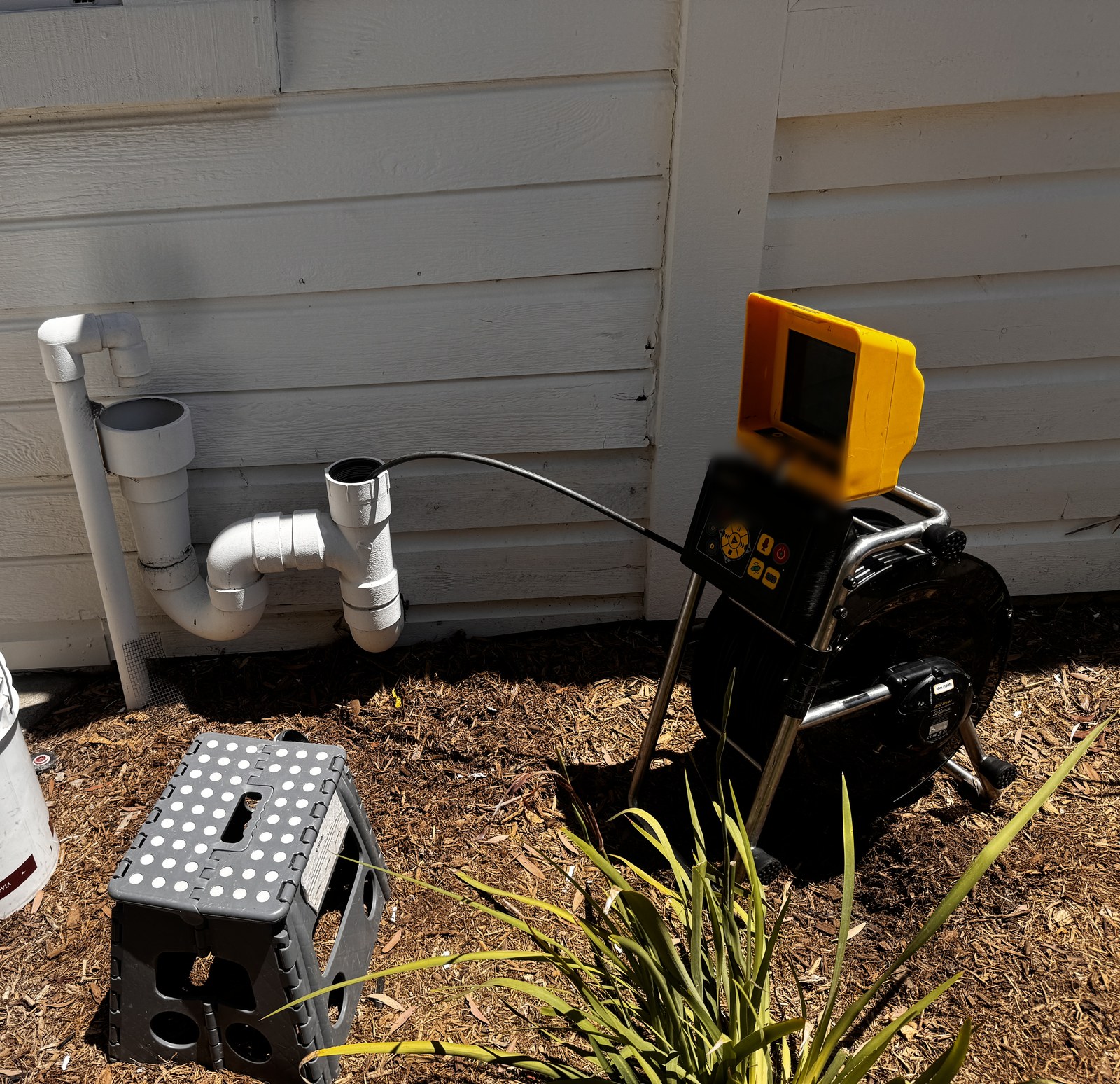
Access matters more than most people realize. A camera entered at the right point reads the pipe wall clearly and tracks footage accurately, so when we tell you a defect sits at 62 feet, you can dig at 62 feet.
When There Isn't One: Roof Vent Access
If there is genuinely no cleanout, the line is still inspectable. The plumbing vent stack on the roof ties into the same drain system, so we go in from above.
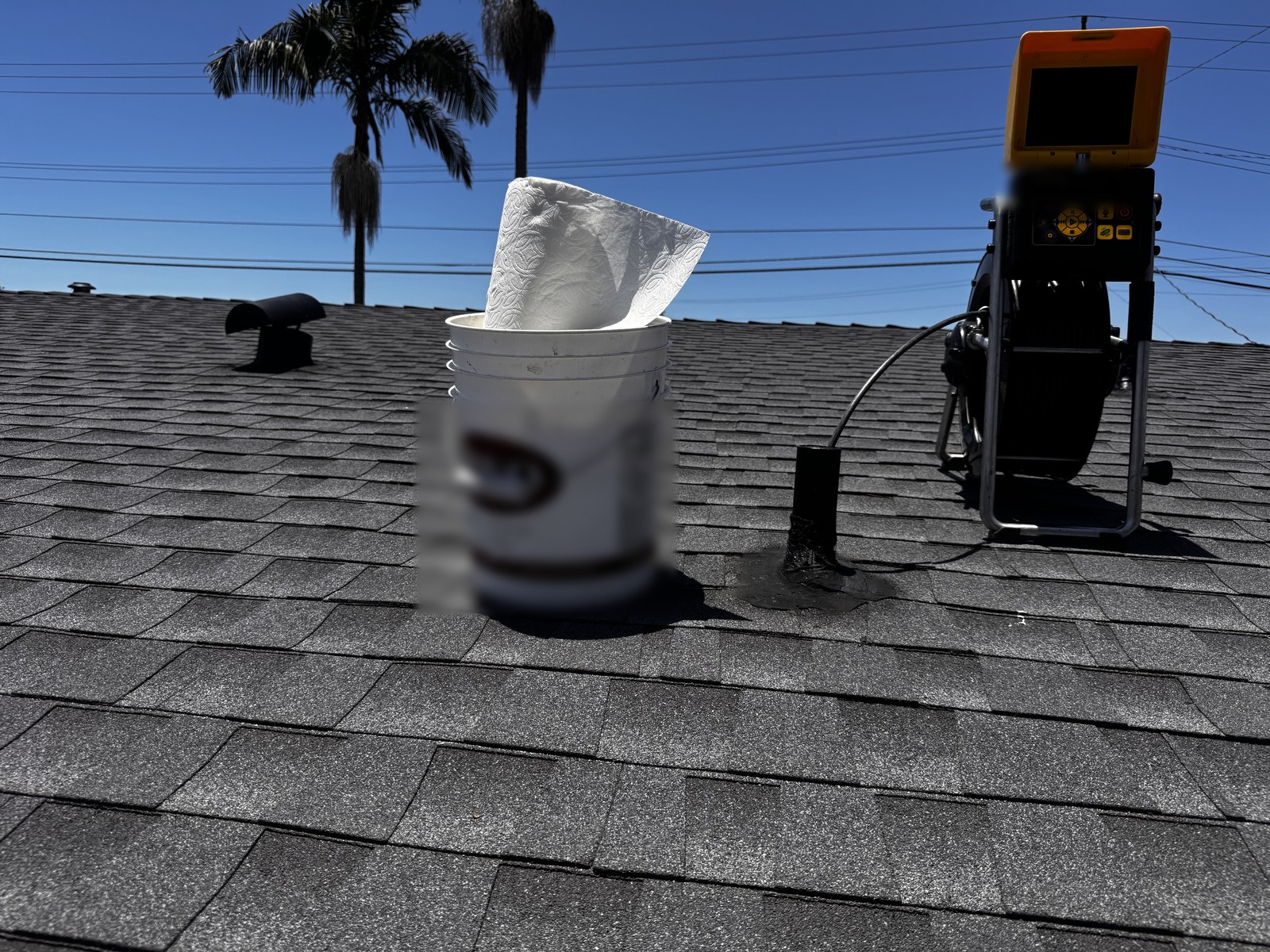
It is a longer path with more direction changes, and it takes more setup — equipment goes up the ladder, and the work happens on a pitched roof. Plenty of companies will decline the job on that basis and tell you the line can't be scoped. It can. It just takes a willingness to get on the roof.
What We Find in Cypress Laterals
- Root intrusion at clay joints — the mature parkway trees on these streets are directly above the line
- Offset joints — decades of slow soil movement leaving a ledge that catches solids
- Bellied sections — low spots holding standing water between uses
- Scale in cast iron — narrowing the working diameter long before anything backs up
- Orangeburg — turns up occasionally in mid-century runs, and is at end of life wherever it appears
Every Inspection Includes a Detailed PDF Report
Before we leave, we walk you through what we found on site, in plain language — where it is, what caused it, and whether it needs attention now or is something to watch. You also get a written PDF report emailed the same day: pipe condition, observations noted by footage marker, and recommended next steps. Documentation you can hand a contractor, use in a negotiation, or keep for your records.
When to Schedule One
- You're in escrow on anything built before 1980
- Backups keep returning after a basic snaking
- Drains gurgle when water runs elsewhere in the house
- There's a green or soggy patch of lawn along the path of the lateral
- Large parkway trees sit between the house and the street
- You were told the line couldn't be inspected
Serving Cypress and North Orange County
FlowPro OC works throughout Cypress — the original tracts near Lincoln and Valley View, the established neighborhoods around the community center and the college, and the newer infill on the southwest side. Call us at 714-992-6363 to schedule an inspection or just to ask questions before booking. Straight answers, not a sales pitch.
Schedule a Sewer Scope in Cypress
On-site walkthrough, same-day PDF report, and honest answers about what we find.
714-992-6363 Call to Schedule